Short answer
Balti is a quick-cooked curry served in the thin pressed-steel dish it is cooked in, and it is most often linked to Birmingham in the 1970s. It sits between a karahi and a gravy curry, with a fresh, spiced sauce and little time on the stove.
Balti is a quick-cooked curry that is served in the same thin, pressed-steel dish it is cooked in, and it is most often linked to Birmingham in the 1970s. It sits between a dry-cooked karahi and a gravy-heavy curry, with a fresh, spiced sauce that clings to the meat. This guide explains what defines a balti, what is known and not known about its origin, how it differs from karahi and bhuna, and which balti dish is on the menu of Shimlas Great Horton Road in Bradford.
What is a balti?
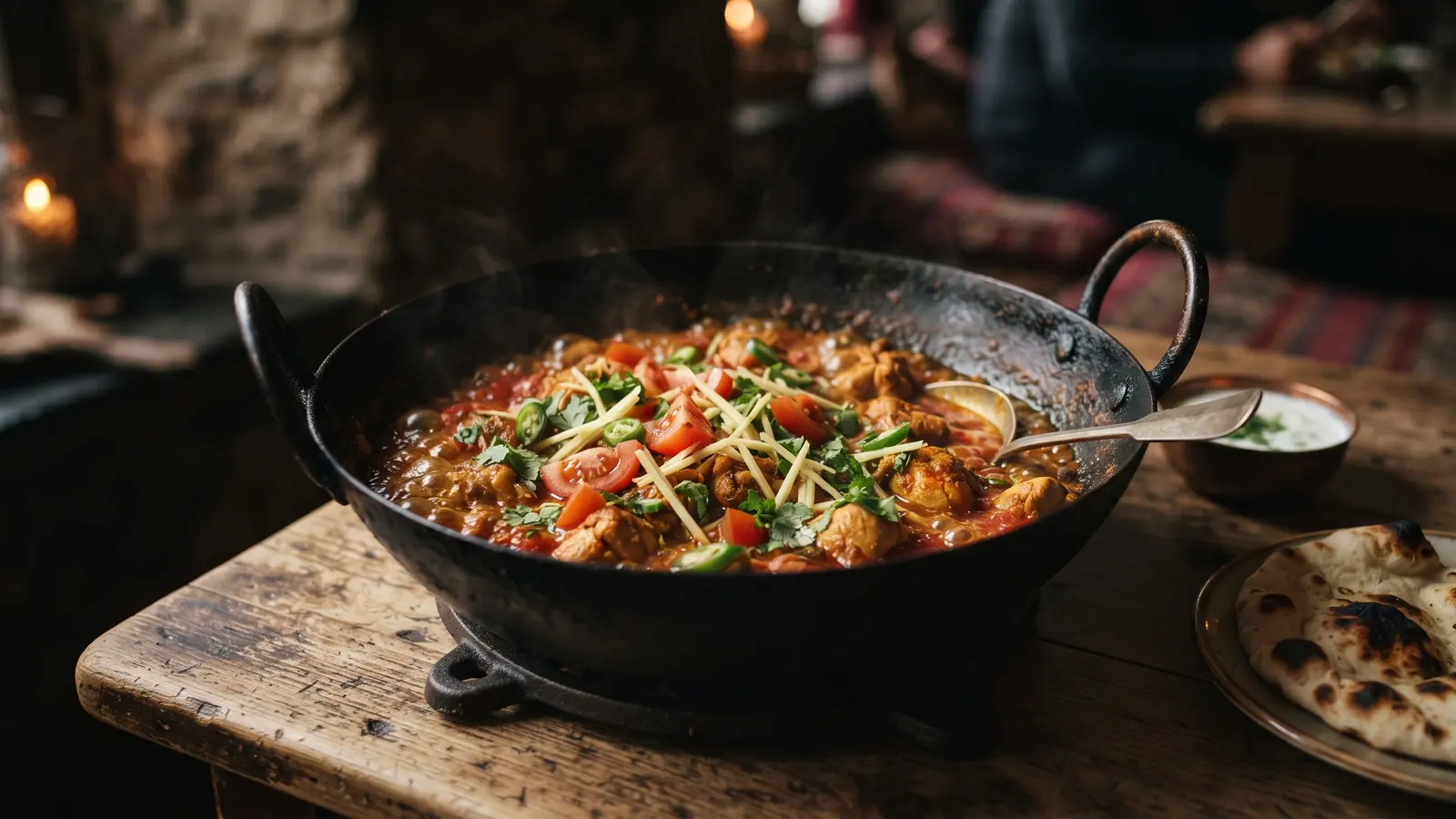
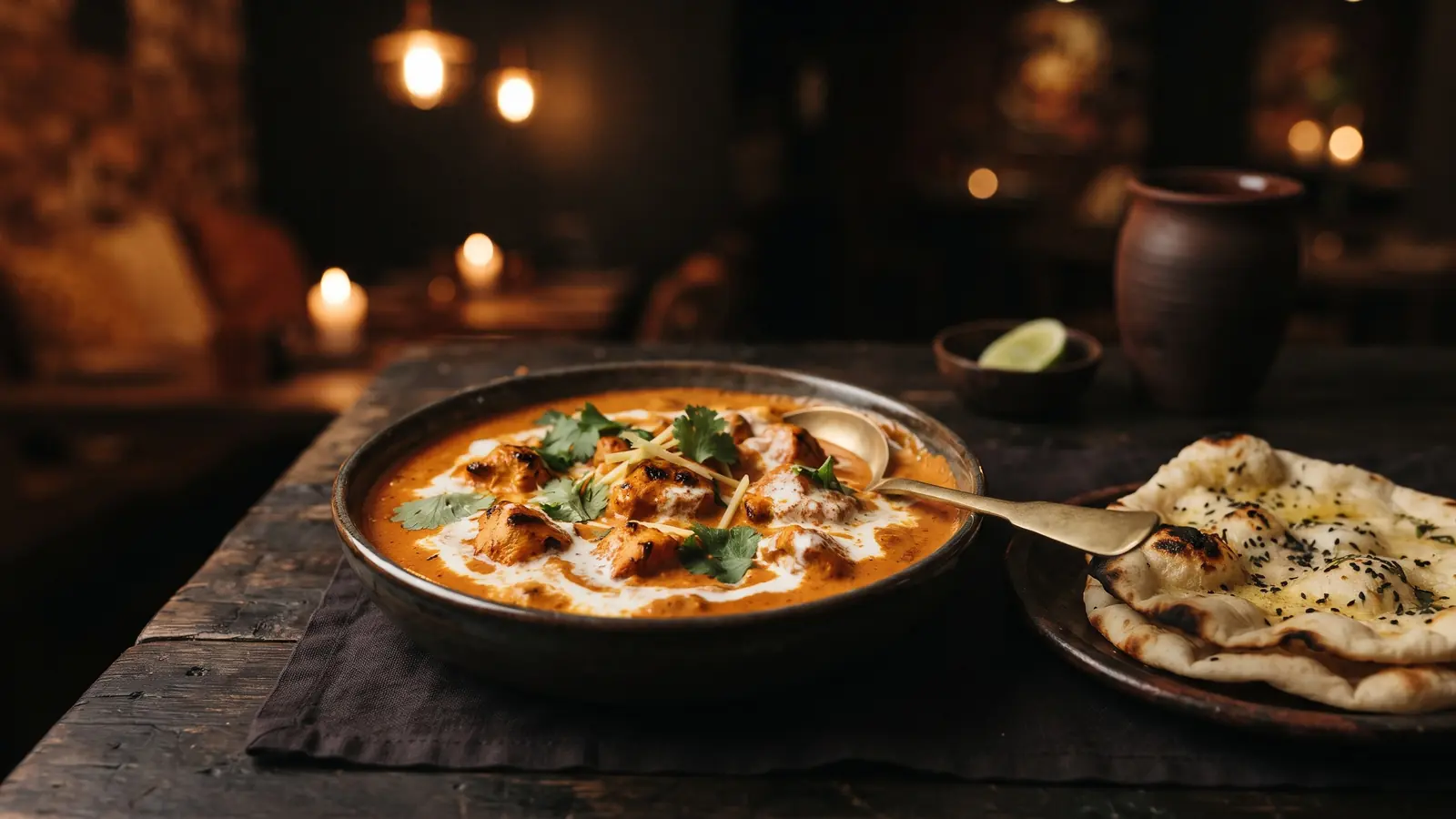
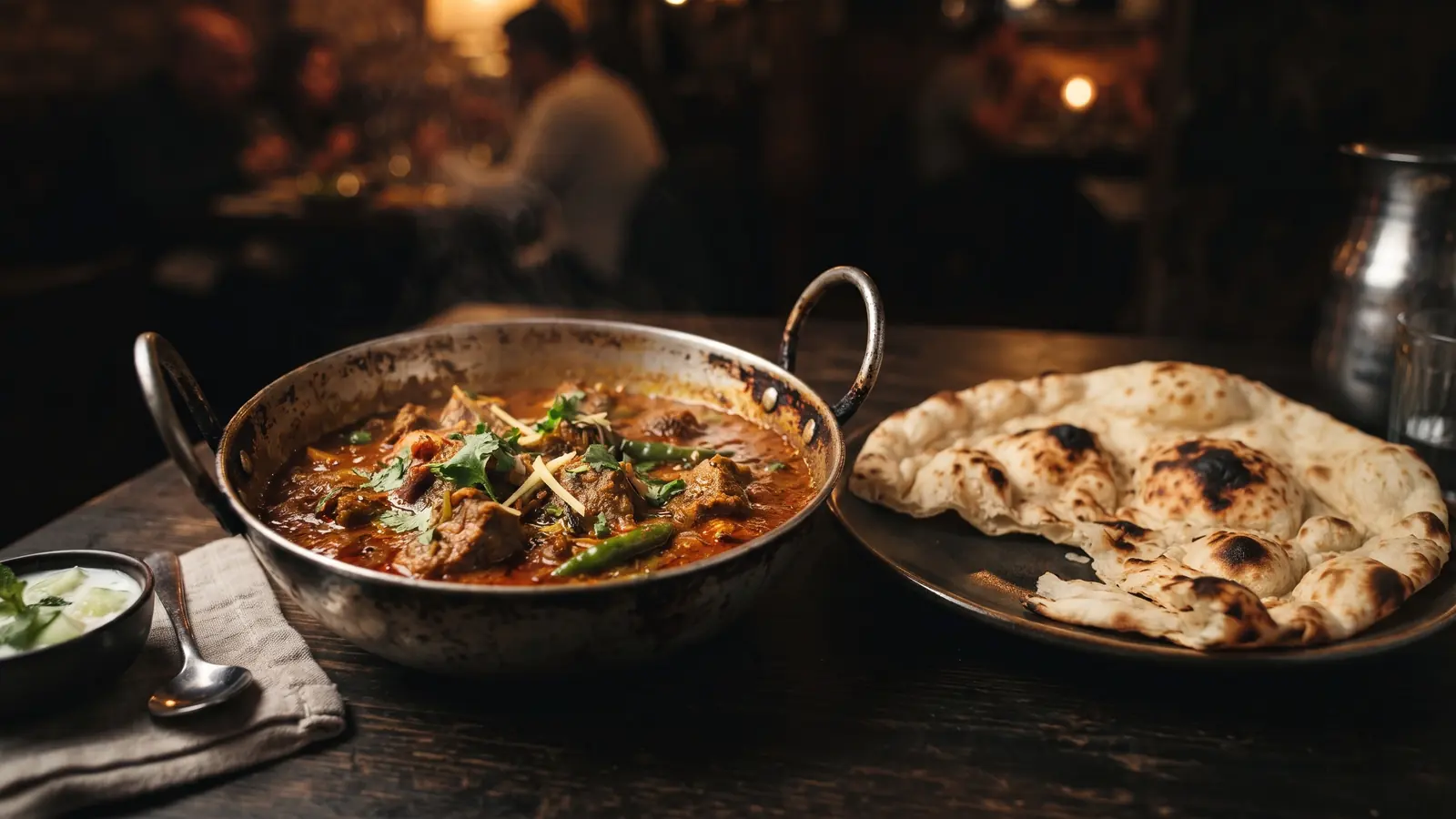
A balti is a curry cooked fast over high heat in a small, thin, bowl-shaped dish, then brought to the table in that same dish. The sauce is based on onion, tomato, garlic, ginger and spices, and it is finished with fresh herbs such as coriander.
Three things define it. The cooking is quick, so the sauce is bright rather than long-simmered. The dish matters, because the thin metal heats quickly and keeps the food hot at the table. And the serving style is shared and informal, with bread used to scoop from the dish.
Balti is a restaurant style rather than a fixed recipe. Any meat, fish or vegetable can be cooked in it, and every restaurant sets its own spice level and thickness of sauce.
Where does balti come from?
Balti is most often described as having been developed in Birmingham in the 1970s by South Asian restaurateurs, but its origin is disputed. The name and the cooking method have older roots in South Asia, and writers disagree about how much of the dish was brought over and how much was invented in Britain.
Commonly reported points are:
- Birmingham, and in particular the area south of the city centre that became known as the Balti Triangle, is the best-known home of the style in Britain.
- The word balti means bucket in Hindi and Urdu, and is generally explained as referring to the vessel.
- Some accounts link the name to Baltistan, a mountain region in northern Pakistan, and argue that the cooking style travelled from there. Others reject this, and the link is not settled.
Because the story depends on retellings and no single source is accepted by everyone, this guide treats the Birmingham origin as commonly reported rather than proven. The style spread to restaurants across Britain, including Bradford, and is now found on menus nationwide.
How is balti different from other curries?
Balti is distinguished by its quick cooking, its thin steel dish and its fresh, spiced sauce, rather than by one fixed list of ingredients. Most other restaurant curries are cooked from a prepared base sauce and simmered longer.
In practice, a balti is cooked to order in small batches. Oil is heated, the aromatics go in, the meat or vegetables are cooked quickly, and the sauce is built around them. The heat is high and the cooking time short, which keeps the vegetables and herbs bright.
The sauce is thicker than a soup and looser than a karahi. It should coat the meat and leave enough in the dish to be mopped up with bread.
How does balti compare with karahi and bhuna?
A balti is quicker and lighter than a bhuna, and it has more sauce than a karahi. The three share a base of onion, tomato and spices, so menus sometimes blur them.
| Dish | Pan or dish | Sauce | Cooking | Typical character |
|---|---|---|---|---|
| Balti | Thin pressed-steel bowl | Medium, with some gravy | Quick, high heat | Fresh, bright, herby |
| Karahi | Deep wok-shaped pan | Thick, clinging | Quick, high heat | Sharp, ginger and green chilli |
| Bhuna | Frying pan or pot | Thick and dark | Slower, concentrated | Onion-heavy, deep |
A karahi and a balti are the closest pair, and some cooks treat the balti as a British-Asian cousin of the karahi. The simplest way to remember them is that a karahi is named after a wok-like pan, a balti after a bucket-like dish, and a bhuna after a method of frying down the masala.
What is a balti dish?
A balti dish is a small, thin, pressed-steel bowl with two handles, and it is the vessel the style is named after. It is lighter and shallower than a traditional cast-iron karahi.
Because the metal is thin, it heats and cools quickly. At the table it is usually set on a mat or board, since the dish is hot. A separate guide on this site covers the dish itself for home cooks.
What do you eat with balti?
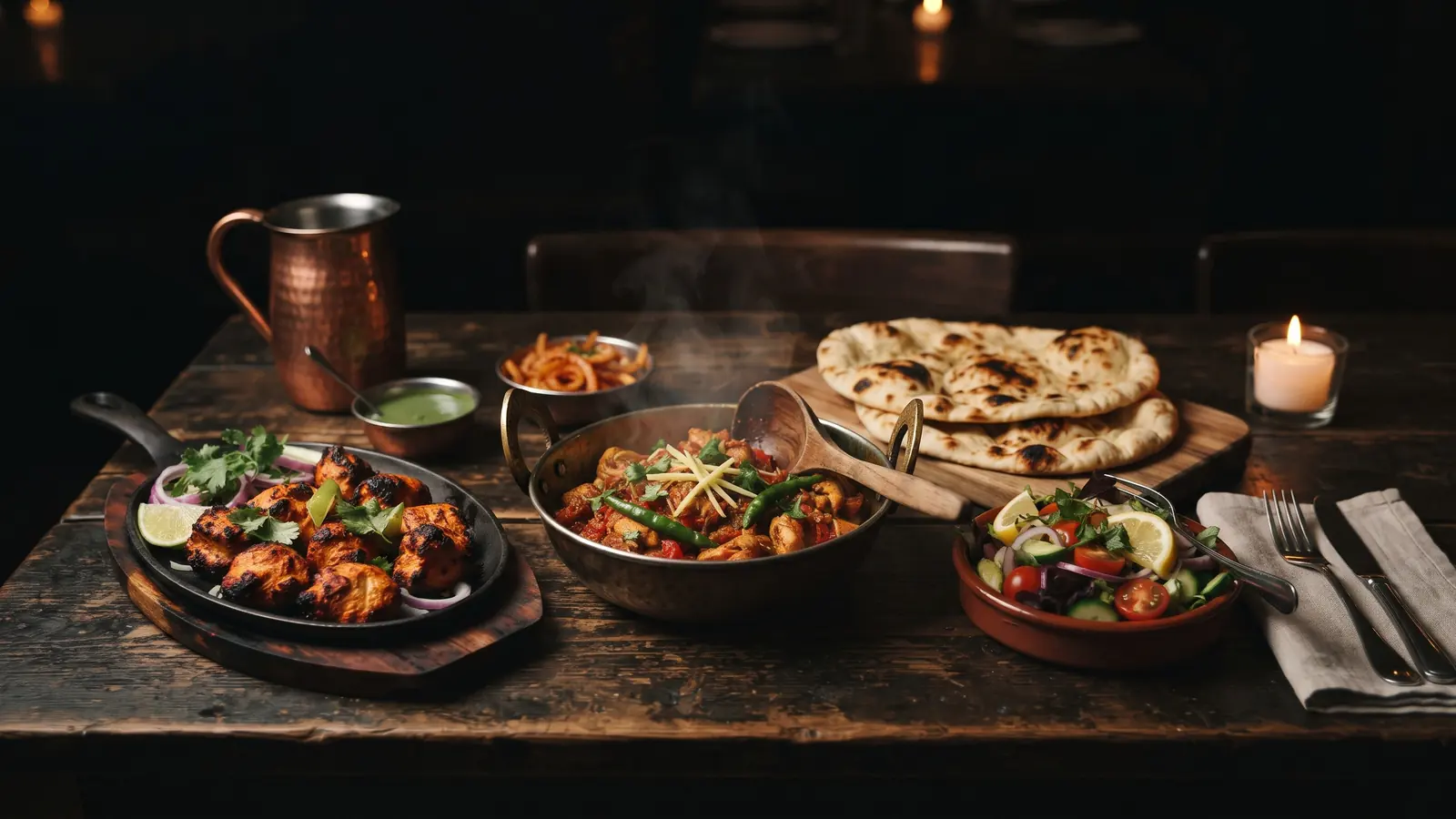
Bread is the traditional partner, and naan is the most common choice. The bread is torn by hand and used to scoop from the dish, which is the reason the style is considered a sharing meal.
Other common sides include:
- plain boiled rice or pilau rice
- raita to cool the heat
- a simple salad
- poppadoms and chutneys to start
Some restaurants add rice to the order automatically, and others sell it separately, so check the menu.
What is on the Shimlas menu that is like a balti?
The Shimlas Great Horton Road ordering page lists one dish with the word balti in its name. In a section labelled karahi and balti, the Chicken Chefs Balti is £12.99 as recorded in November 2026, described on the page as chicken cooked off the bone in a balti with spices and herbs.
That description tells you two things. The chicken is boneless, which is a point of difference from many karahi dishes, where the meat is served on the bone. And the dish is flavoured with spices and herbs, which matches the fresh style the name suggests. The page does not say how hot it is, whether it is cooked to order, or what dish it is served in.
For comparison, the same section lists karahi dishes. The Shinwari Lamb Karahi and Desi Lamb Karahi are each £17.49, and the Shinwari Chicken Karahi is £23.49. In the curries section a Bhuna is £11.49. For heat level, sauce and the vessel it is served in, ask the restaurant on 01274 723992.
These are collection prices from the official ordering page and can differ in person or on delivery apps. For the current menu and to order, use shimlas.uk. This guide does not take orders. The recorded list is on the menu page.
Is balti the same as a madras or a vindaloo?
No. Balti is defined by its method and dish, while madras and vindaloo are heat levels or named restaurant curries with their own recipes. A balti can be mild or hot.
Madras is commonly treated on British menus as a hotter standard curry, and vindaloo as hotter still, but the exact heat of any one restaurant’s version varies. A balti has no fixed heat, which is why asking the restaurant matters.
How do you cook balti at home?
A home balti is made by cooking onion, garlic and ginger quickly in oil, adding tomato and spices, then cooking the meat or vegetables in the sauce until just done. The speed and the fresh finish are what make it different from a slow curry.
Steps for a simple version:
- Heat oil in a wide pan or a balti dish until it is very hot.
- Fry sliced onion, garlic and ginger for a few minutes.
- Add spices such as coriander, cumin, turmeric and chilli, then chopped tomato.
- Add the meat or vegetables and cook through, adding a splash of water if the sauce is dry.
- Finish with fresh coriander and a little garam masala.
Chicken breast needs only a few minutes, while lamb needs a longer cook before the last stage. Use the thinnest dish you have if you want the traditional effect, though a wide pan works.
How do you order a balti you will enjoy?
Choose the protein first, then ask about the heat and the thickness of the sauce. Because balti is a method rather than a recipe, two restaurants can serve quite different dishes under the same name.
Good questions to ask are whether the meat is on or off the bone, how hot the standard version is, and whether the dish arrives in a balti dish or on a plate. Pair it with bread rather than ordering extra rice if you want the traditional experience, and add a raita if you prefer a gentler finish. Sharing two or three dishes between a group works well with a balti, because the sauce is moderate and lets you taste several side by side.
What are the common mistakes with balti?
The common mistakes are treating it as a heat level, expecting a standard recipe and overcooking the sauce. Each leads to disappointment because the style is built on speed and freshness.
- Assuming balti means hot. It does not, and a balti can be mild.
- Expecting one recipe. The name covers many local variations.
- Cooking the sauce too long at home. A long simmer turns a balti into an ordinary curry.
- Letting the dish go cold. Thin steel loses heat once it leaves the stove, so serve promptly.
Is balti halal, vegetarian or suitable for allergies?
That depends on the restaurant and the recipe. Balti can be made with meat, fish or vegetables, so the name tells you nothing about the ingredients, and the sauce may contain dairy or nuts in some kitchens.
For Shimlas, the official ordering page tags the restaurant as Halal, and Zabihah lists it as fully halal with a halal certificate seen on display. No certifying body is named in the sources checked. This guide gives no religious rulings, so ask staff directly if you need to be certain. The only balti on the recorded menu is the chicken one. The ordering page recorded no allergen details, so ask before you order.
Common questions
Is balti an Indian or Pakistani dish?
It is best described as a British-Asian restaurant style. Its roots are usually traced to Pakistani-run restaurants in Birmingham, and the name and cooking method draw on older South Asian cooking.
What does balti mean?
Balti is commonly translated as bucket in Hindi and Urdu, and the dish is named after the vessel. Some writers link it to the Baltistan region, but that origin is disputed.
Is balti spicy?
It is flavourful and fresh rather than always hot. Heat depends on the restaurant, so ask when you order.
Do you eat balti with a knife and fork?
Traditionally it is eaten with naan or other bread torn by hand, scooping from the dish. Many restaurants also serve rice alongside.
Is a balti curry hotter than a madras?
Not necessarily. Balti is defined by its method and dish rather than a fixed heat level, while madras is a hotter restaurant standard on many British menus.
This page is part of the independent guide to Shimlas Great Horton Road, which has the address, hours and menu.
This article is general information from an independent guide, not from Shimlas Great Horton Road itself. For the store’s current details see hours and location.